
The Year Ahead 2026: Enhancing Data-Driven Decision-Making
Workforce data not only shapes how employment decisions are made — but how they’re scrutinized. Whether addressing pay equity, evaluating AI tools or managing reorganizations, 2026 is a good year for employers to anticipate risk early, align with compliance obligations and support decisions that hold up under scrutiny.
Takeaway
“Employers are not facing entirely new risks, but familiar practices are being examined in new ways.”
Christopher T. Patrick
Principal | Co-Leader, Workplace Analytics & Preventive Strategies Practice
Decision Areas
Pay Equity + Transparency
Expanded Efforts at State + Local Levels
Legal requirements surrounding pay equity are expected to continue expanding at the state and local levels. An area that once centered on federal law now includes a patchwork of state laws, international mandates and growing pay transparency and pay data reporting obligations. At the same time, data-driven analysis can be a helpful tool in evaluating compensation systems, adding to employers’ compliance complexity. Here’s what employers need to know for 2026:
State-Level Pay Transparency
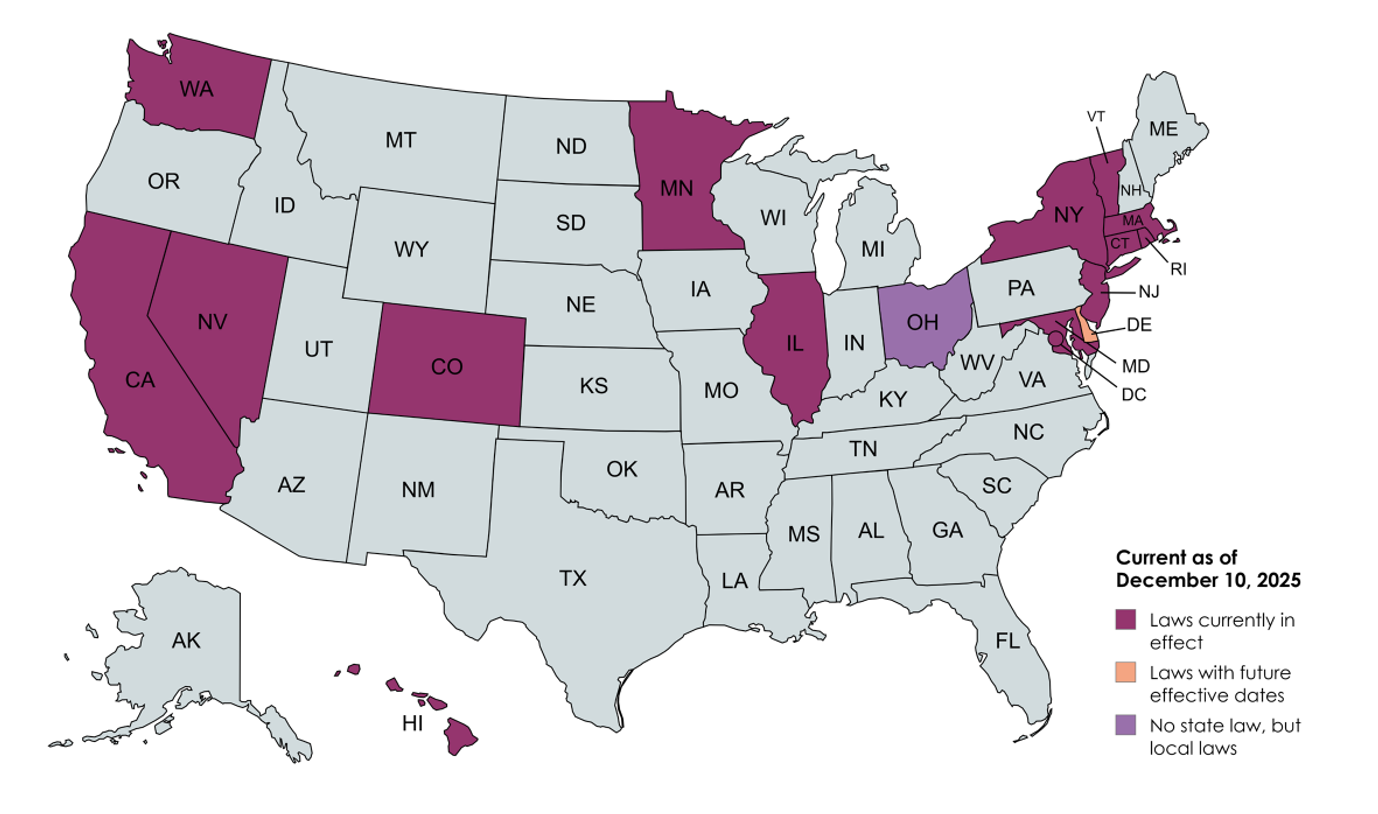
Pay Transparency Strategy
Looking forward, multistate employers should consider a harmonized disclosure approach and consistent practices to help ensure compliance.
- Build a unified disclosure approach to reconcile differing state formulas to reduce likelihood of noncompliance.
- Use automation to align postings, requests and internal-mobility disclosures as well as with reporting obligations.
- Prepare for expanding reporting obligations across states and localities.
- Rely on compliance framework for monitoring current and developing obligations.
Related Content


Restructuring/Reduction in Force Analytics
Thoughtful Strategies for Broader Anticipated Restructuring Activities
Organizations can anticipate increased restructuring activities in 2026 as they pursue automation and cost containment. A key to any strategic workforce change is to have legally defensible, data-informed support.
Plan Items
Employers seeking a unified framework for supporting multistate compliance in this area should make sure their restructuring/RIF plans include:
- Adverse impact analyses to evaluate potential risks early.
- Federal WARN Act and state-level notice obligations.
- Selection criteria review for consistency, job-relatedness and defensibility.
- OWBPA release compliance.
- A review of separation agreements to ensure compliance with state law nuances.


Pressure on AI Hiring Tools
Regulatory Focus on Validity + Transparency
Validity + Transparency
Selecting, auditing and validating AI and other employment decision tools will be more challenging for employers in 2026.
Here’s why:
- Bias-audit mandates are expanding across states and cities:
- California: Regulations under Fair Employment and Housing Act.
- Colorado: Effective 2026.
- Illinois: Effective 2026.
- New York City: Local Ordinance.
- EU: Classifies employment-related AI as a high risk.
- Employers must ensure transparency, notice and measurable fairness.
- Employers have responsibilities to protect applicant and employee data.
Tip 1: Ensure Tools Are Valid, Job-Related + Defensible
- Conduct formal validation studies tied to essential job functions.
- Document vendor due diligence, data sources and testing methodology.
- Comply with recordkeeping rules.
Tip 2: Engage in Proactive Risk Mitigation
- Inventory all AI tools and determine which laws are applicable.
- Implement periodic adverse-impact testing and bias auditing.
- Establish cross-functional governance to oversee AI-driven decisions.
- Implement AI use policies.
- Monitor impact of EO 14365 (“Ensuring a National Policy Framework for Artificial Intelligence”) focused on state and local AI law preemption.


© Jackson Lewis P.C. This material is provided for informational purposes only. It is not intended to constitute legal advice nor does it create a client-lawyer relationship between Jackson Lewis and any recipient. Recipients should consult with counsel before taking any actions based on the information contained within this material. This material may be considered attorney advertising in some jurisdictions. Prior results do not guarantee a similar outcome.
Focused on employment and labor law since 1958, Jackson Lewis P.C.’s 1,100+ attorneys located in major cities nationwide consistently identify and respond to new ways workplace law intersects business. We help employers develop proactive strategies, strong policies and business-oriented solutions to cultivate high-functioning workforces that are engaged and stable, and share our clients’ goals to emphasize belonging and respect for the contributions of every employee. For more information, visit https://www.jacksonlewis.com.